
Taking the first step toward improving your skin or appearance can feel both exciting and intimidating. For many people, visiting an aesthetic clinic is a new experience filled with questions, expectations, and a desire for trustworthy guidance. Understanding what happens during your first consultation can ease uncertainty and help you feel confident, informed, and empowered before beginning any treatment journey.
At BrightTrust Aesthetics & Laser, the initial consultation is designed to be educational, personalized, and supportive. It’s not about rushing into procedures—it’s about understanding your skin, your goals, and the best possible path forward for long-term results.
This guide walks you through exactly what to expect from your first visit, so you can arrive prepared and leave feeling reassured.
Why the First Consultation Matters
Your first visit sets the foundation for every result you’ll achieve moving forward. A proper aesthetic consultation allows providers to understand not just what you want to change, but why you want to change it, and how to do so safely and effectively.
Rather than offering one-size-fits-all solutions, this initial meeting focuses on:
- Listening to your concerns
- Evaluating your skin and features
- Educating you on realistic outcomes
- Creating a customized approach
- Building trust and transparency
This process ensures that every treatment aligns with your unique needs and expectations.
Step One: A Welcoming and Comfortable Environment
For many first-time clients, walking into a professional aesthetic space can feel unfamiliar. However, a quality consultation should feel welcoming, calm, and professional—more like a guided conversation than a clinical appointment.
Unlike a rushed spa visit, an aesthetic consultation prioritizes education over relaxation. While comfort is still essential, the focus is on understanding your skin and identifying the most effective strategies to improve it.
You should feel comfortable asking questions, expressing concerns, and discussing your goals openly.
Understanding Your Goals and Expectations
One of the most important parts of your first consultation is the conversation. Your provider will ask detailed questions about what you want to improve, what has or hasn’t worked in the past, and what kind of results you’re hoping to achieve.
Topics often include:
- Skin concerns (aging, acne, pigmentation, texture)
- Desired level of change (subtle vs. dramatic)
- Timeline and upcoming events
- Lifestyle factors
- Budget and maintenance preferences
This discussion helps ensure that any recommended cosmetic treatment aligns with your expectations and comfort level.
The Importance of a Professional Skin Evaluation
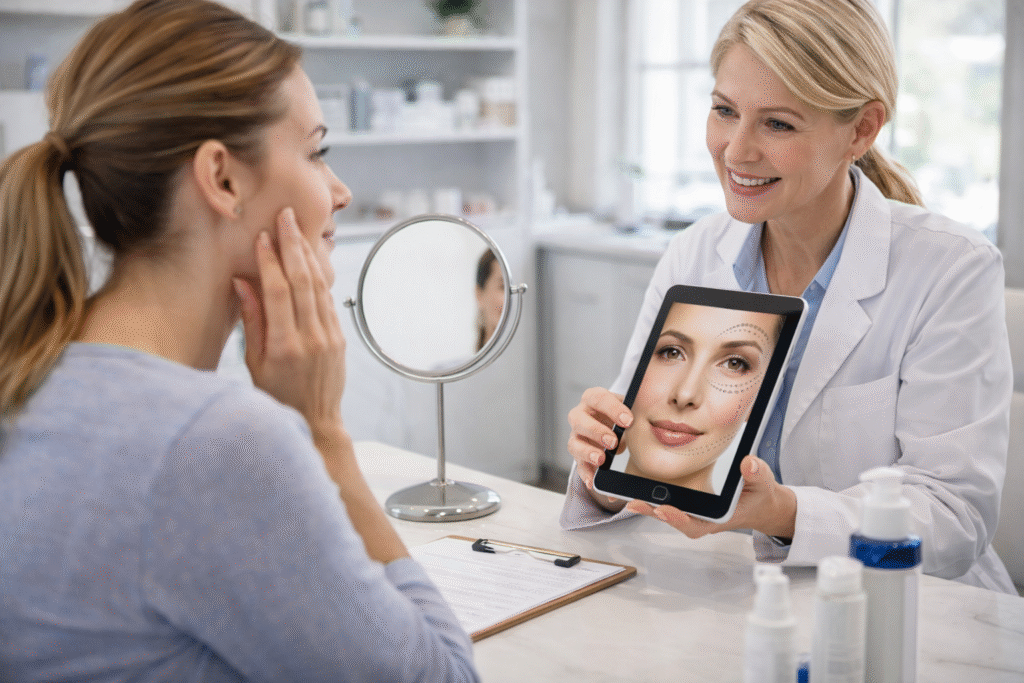
A thorough skin assessment is a key component of your consultation. Rather than relying on surface-level observations, providers evaluate the skin’s condition, structure, and behavior.
This evaluation may include:
- Skin type and sensitivity
- Hydration levels
- Texture and elasticity
- Pigmentation patterns
- Signs of sun damage or aging
- Breakouts or congestion
This analysis helps identify the root causes of visible concerns, allowing treatments to address not just symptoms, but underlying skin health.
Learning About Treatment Options
Once your skin and goals are clearly understood, your provider will walk you through appropriate treatment options. This part of the consultation is educational, not sales-driven.
You’ll learn about:
- How specific treatments work
- Expected results and timelines
- Potential side effects or downtime
- Number of sessions needed
- Maintenance requirements
Each recommended option is explained clearly so you can make informed decisions. Treatments are never rushed or pushed—your comfort and confidence come first.
Creating a Personalized Roadmap for Results
Rather than focusing on a single appointment, your provider may outline a long-term aesthetic plan designed to deliver progressive, lasting improvements. This roadmap often combines multiple treatments over time to support skin health and aging gracefully.
A personalized plan may include:
- Short-term treatments for immediate concerns
- Long-term strategies for prevention and maintenance
- Seasonal adjustments for skin needs
- Home-care recommendations
- Flexible options that evolve with your skin
This approach ensures that your results look natural and improve steadily rather than abruptly.
Transparency About Safety and Expectations
A quality consultation includes honest discussions about what treatments can and cannot do. Providers should clearly explain limitations, potential risks, and realistic outcomes.
You should expect transparency about:
- Who is a good candidate for each treatment
- What results look like over time
- When treatments may not be appropriate
- How your skin may respond individually
This honesty helps build trust and ensures you feel secure moving forward.
Addressing Concerns and Answering Questions
Your first consultation is the best time to ask questions—no concern is too small or too simple. A professional provider welcomes curiosity and takes time to address uncertainties.
Common questions include:
- Will this treatment hurt?
- How long will results last?
- What is the recovery like?
- Can treatments be combined?
- How soon will I see changes?
Clear answers help you feel informed and in control of your decisions.
What Happens After the Consultation?
At the end of your visit, you’ll leave with clarity—not pressure. Some clients choose to schedule treatments immediately, while others prefer time to consider their options.
You may leave with:
- A customized treatment plan
- Educational materials
- Skincare recommendations
- A clear understanding of next steps
Regardless of your timeline, the goal is for you to feel confident, educated, and supported.
Conclusion
Your first aesthetic consultation is more than an introduction—it’s the beginning of a thoughtful, personalized journey toward healthier, more confident skin. With expert guidance, honest communication, and a customized approach, you gain clarity about your options and control over your results. When done right, this first step empowers you to make informed choices, set realistic expectations, and move forward with confidence, knowing your care is designed around you and your long-term goals.