
Facials are often seen as a luxury—something reserved for relaxation days or self-care moments. But when it comes to achieving visible, lasting improvements in your complexion, not all facial treatments are created equal. At BrightTrust Aesthetics & Laser, clients frequently ask about the difference between spa facials and medical-grade options—and more importantly, which one truly delivers results.
While both types of facials can feel indulgent and refreshing, their purpose, effectiveness, and long-term impact on skin health differ significantly. Understanding these differences helps you choose the option that aligns with your goals, whether you’re looking for temporary glow or meaningful skin transformation.
Understanding the Purpose Behind Each Facial Type
Spa facials are primarily designed for relaxation. They focus on soothing the senses, hydrating the surface of the skin, and providing a moment of calm. Medical-grade options, on the other hand, are results-driven and designed to address specific skin concerns using advanced tools and formulations.
Medical grade facials are performed under clinical protocols and often supervised or designed by medical professionals. Their goal is not just to improve how your skin looks today—but how it behaves, repairs, and ages over time.
Ingredients: The Key Difference That Changes Results
One of the biggest distinctions between spa and medical facials lies in the products used. Spa facials typically rely on cosmetic-grade products that are pleasant and nourishing but limited in potency. Medical-grade facials use clinical skincare formulations with higher concentrations of active ingredients.
These ingredients are designed to:
- Penetrate deeper layers of the skin
- Stimulate cellular renewal
- Target pigmentation, acne, and aging
- Improve texture and tone over time
Because of their strength and precision, these formulations must be applied by trained professionals who understand skin physiology and safety protocols.
Technology and Techniques Matter
Another major factor is the technology involved. Spa facials may include gentle exfoliation, steam, massage, and masks. While relaxing, these techniques work primarily on the surface.
In contrast, professional facial treatments often integrate advanced technologies such as:
- Medical-grade exfoliation systems
- Light-based therapies
- Controlled chemical exfoliation
- Oxygen infusion
- Deep hydration delivery methods
These techniques trigger biological responses within the skin, encouraging repair, collagen stimulation, and long-term rejuvenation rather than a short-lived glow.
Customization and Skin Analysis
At a spa, facials are often standardized or loosely customized. In an aesthetic clinic, treatments are built around a thorough skin assessment. Providers evaluate skin type, concerns, sensitivity, lifestyle, and goals before selecting the appropriate treatment approach.
This personalized planning allows providers to:
- Address underlying causes of skin concerns
- Adjust intensity safely
- Combine modalities strategically
- Prevent irritation or setbacks
- Track progress over time
This level of customization is critical for clients dealing with acne, aging, sun damage, or chronic sensitivity.
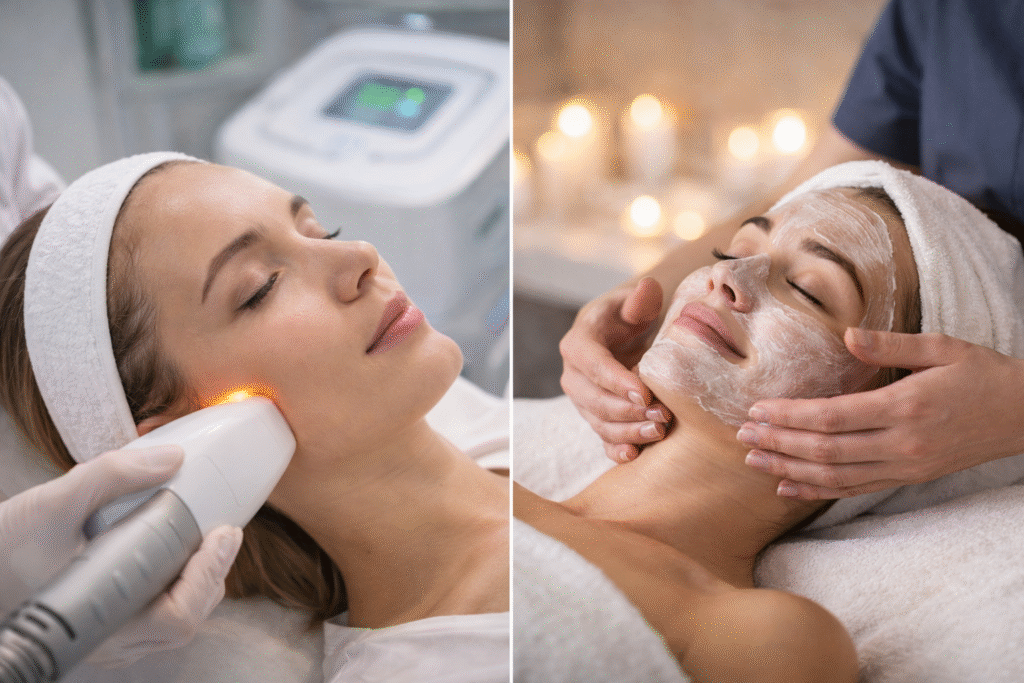
Results: Temporary Glow vs. Long-Term Change
Spa facials can leave your skin soft, hydrated, and relaxed—perfect for a short-term boost. However, results typically fade within days because the treatment does not stimulate deeper biological processes.
Medical-grade facials, on the other hand, are designed to create change at a cellular level. As part of comprehensive skin rejuvenation services, these treatments aim to:
- Improve skin texture and elasticity
- Reduce fine lines and uneven tone
- Support collagen production
- Enhance clarity and smoothness
- Strengthen the skin barrier
The result is skin that continues to improve after the treatment—not just immediately afterward.
Safety, Training, and Oversight
Another important difference is who performs the treatment. Spa facials are typically administered by estheticians trained in relaxation-based techniques. Medical-grade facials are delivered by highly trained providers who understand skin biology, contraindications, and clinical safety standards.
This medical oversight allows for:
- Use of stronger active ingredients
- Deeper exfoliation techniques
- Integration with other aesthetic treatments
- Safe treatment of complex skin conditions
This approach minimizes risk while maximizing results.
Who Benefits Most From Medical-Grade Facials?
Medical-grade facials are ideal for individuals who want more than relaxation. They are especially beneficial for those who:
- Struggle with persistent acne or congestion
- Notice early or advanced signs of aging
- Have sun damage or uneven pigmentation
- Want preventative anti-aging care
- Seek long-term improvement, not temporary effects
These treatments are often part of a broader aesthetic plan that supports skin health year-round.
Can Spa Facials Still Have a Place?
Absolutely. Spa facials can complement medical-grade treatments by supporting relaxation, lymphatic drainage, and stress reduction. They can be helpful between clinical treatments or during periods when the skin needs gentle care.
However, when your goal is visible improvement, correction, and sustained skin health, medical-grade options offer a level of efficacy that spa facials cannot match.
Conclusion
Choosing the right facial comes down to your goals. If relaxation and short-term glow are your priorities, spa facials can be a pleasant experience. But if you’re seeking meaningful, lasting improvements in skin tone, texture, and health, medical-grade facials deliver a deeper level of care. With advanced technology, potent ingredients, and professional oversight, these treatments go beyond pampering—helping your skin function better, age more gracefully, and look its best long after the appointment ends.